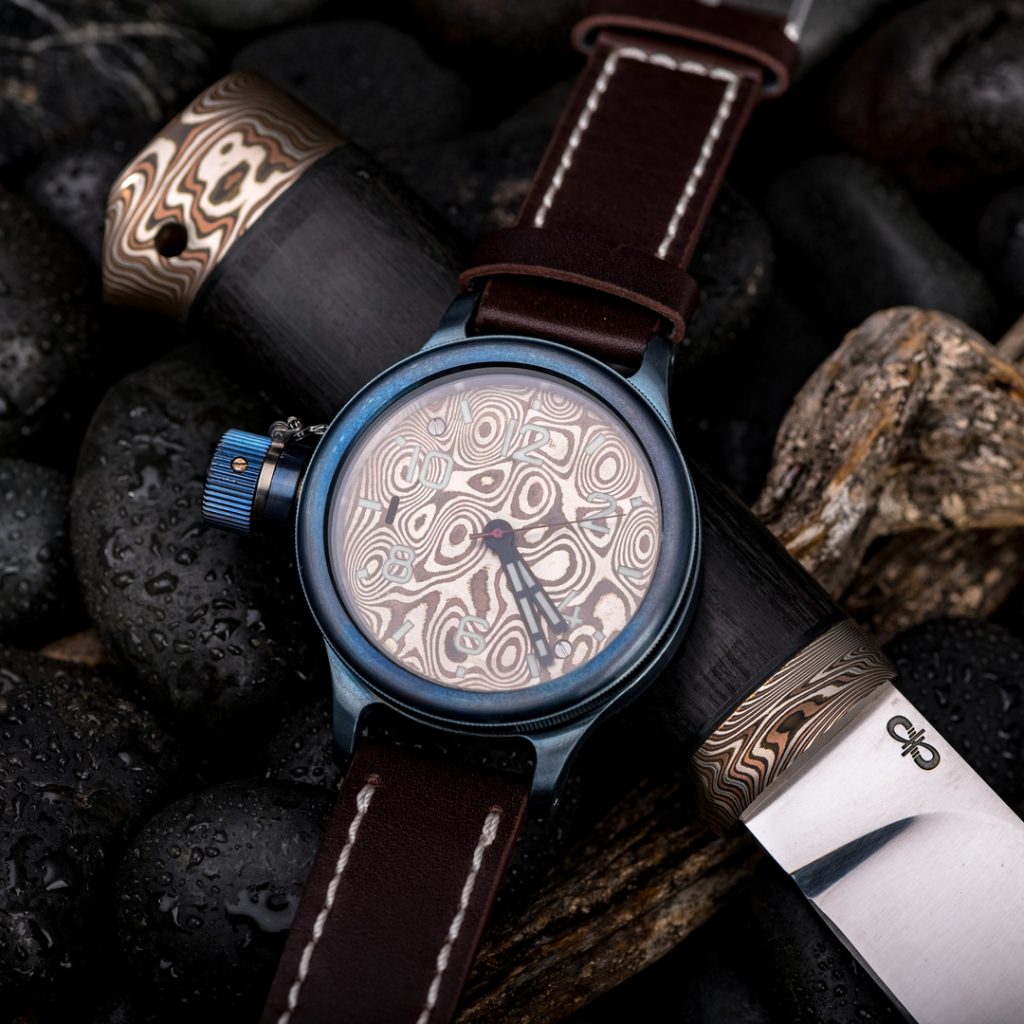
Mokume-gane
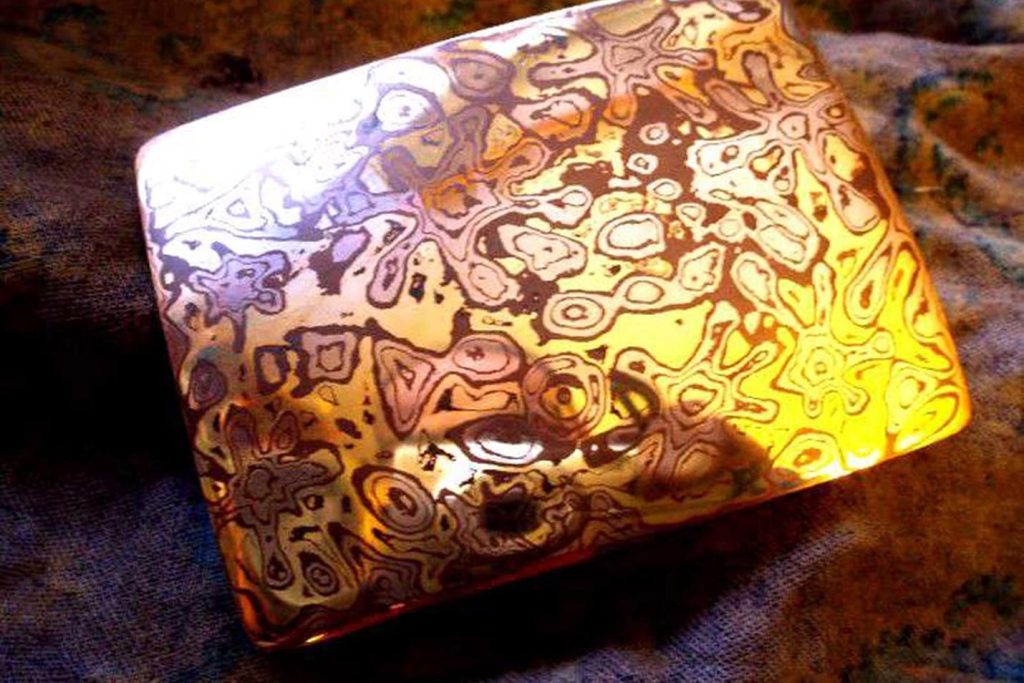
The mokume-gane technique (mo — wood, kume — texture, gane — metal) was invented by swordsmith Denbei Shoami (1651–1728), who lived in Akita Prefecture in northern Japan. He discovered that non-ferrous metals could be joined according to the same principle used to make Damascus steel.
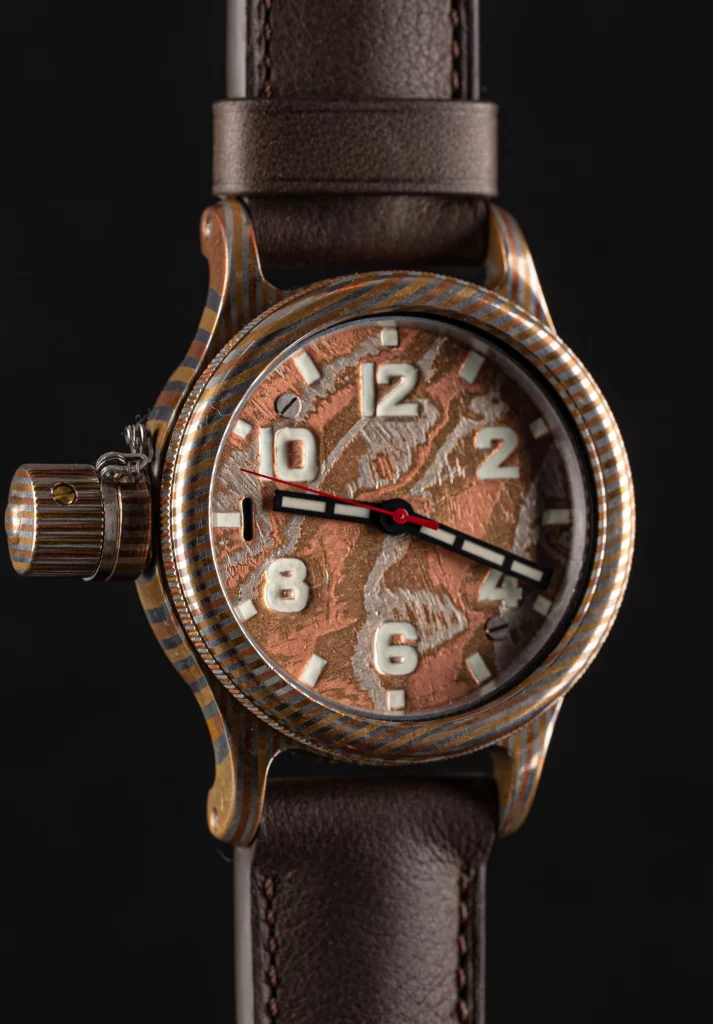
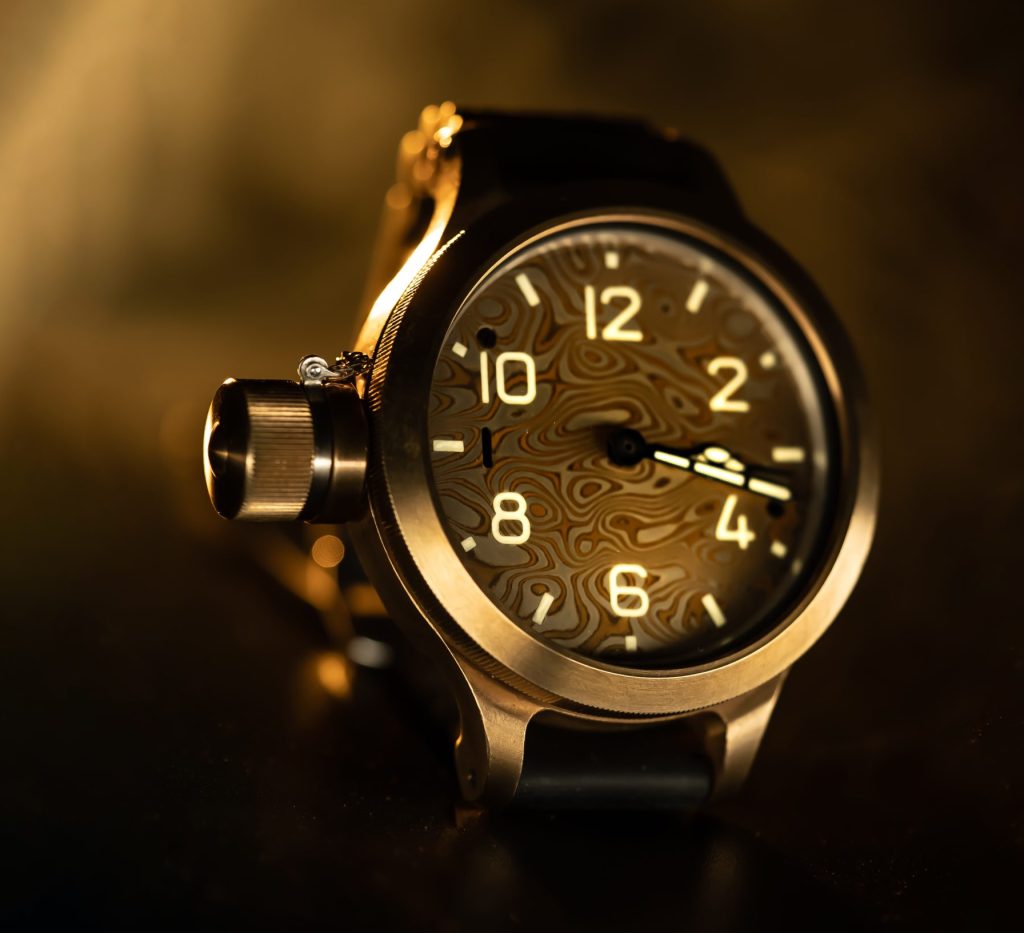
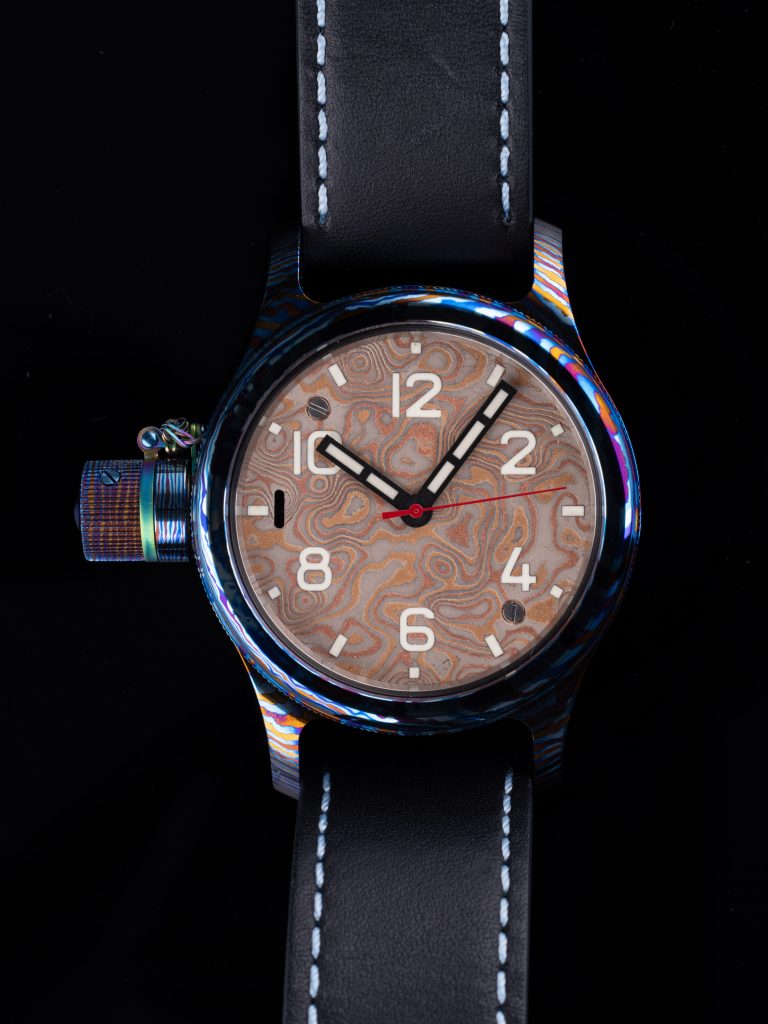
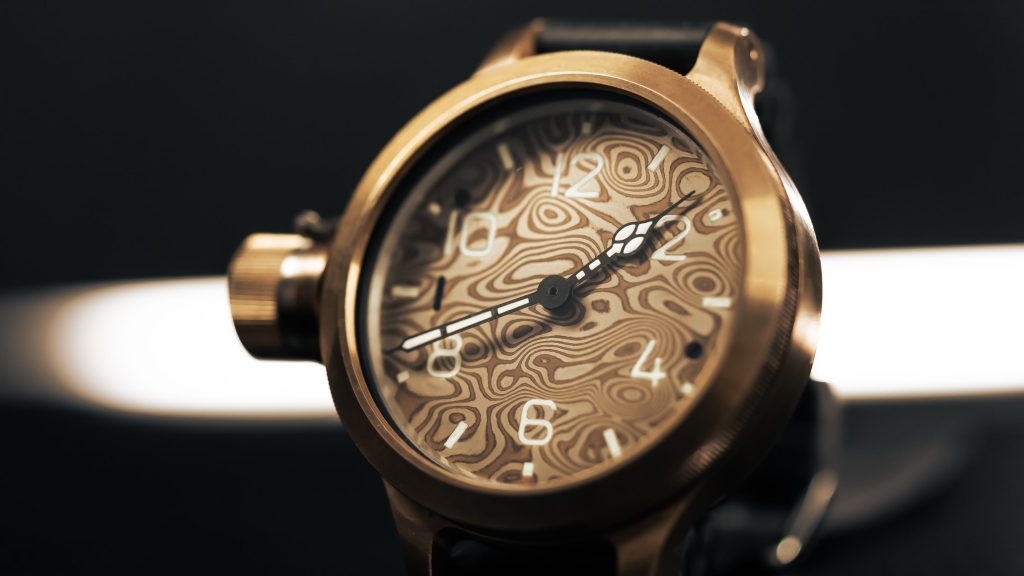
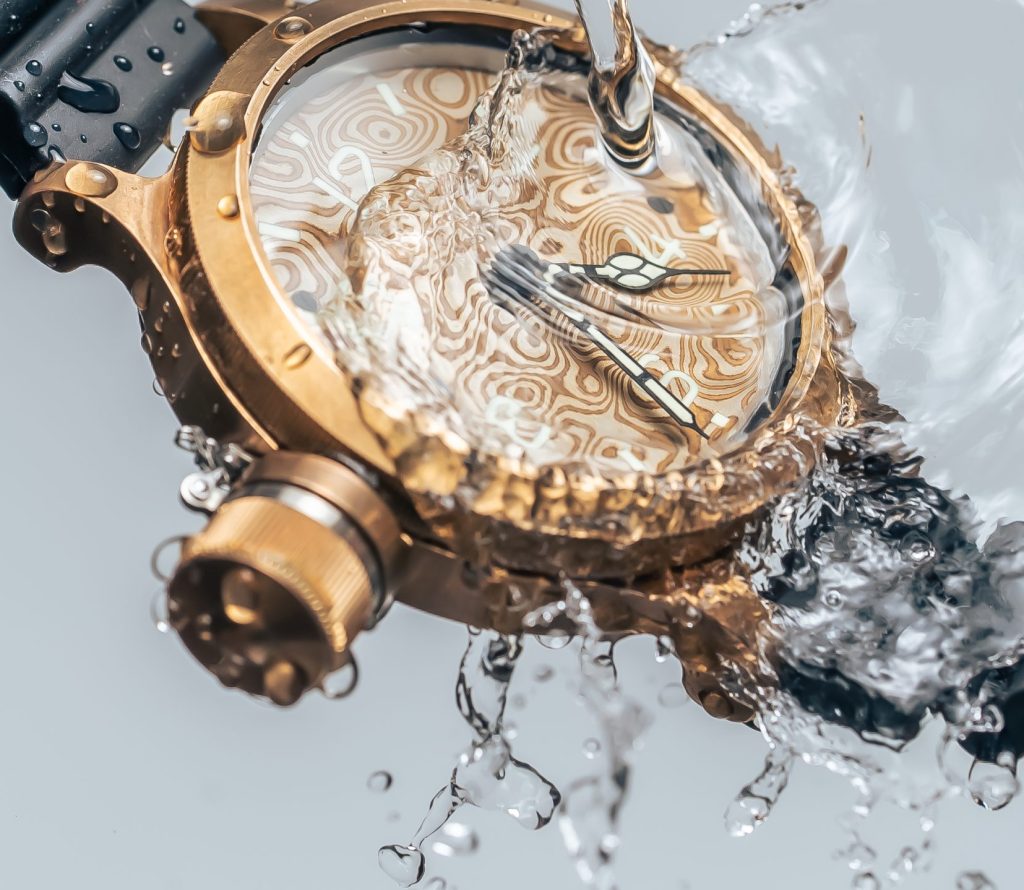
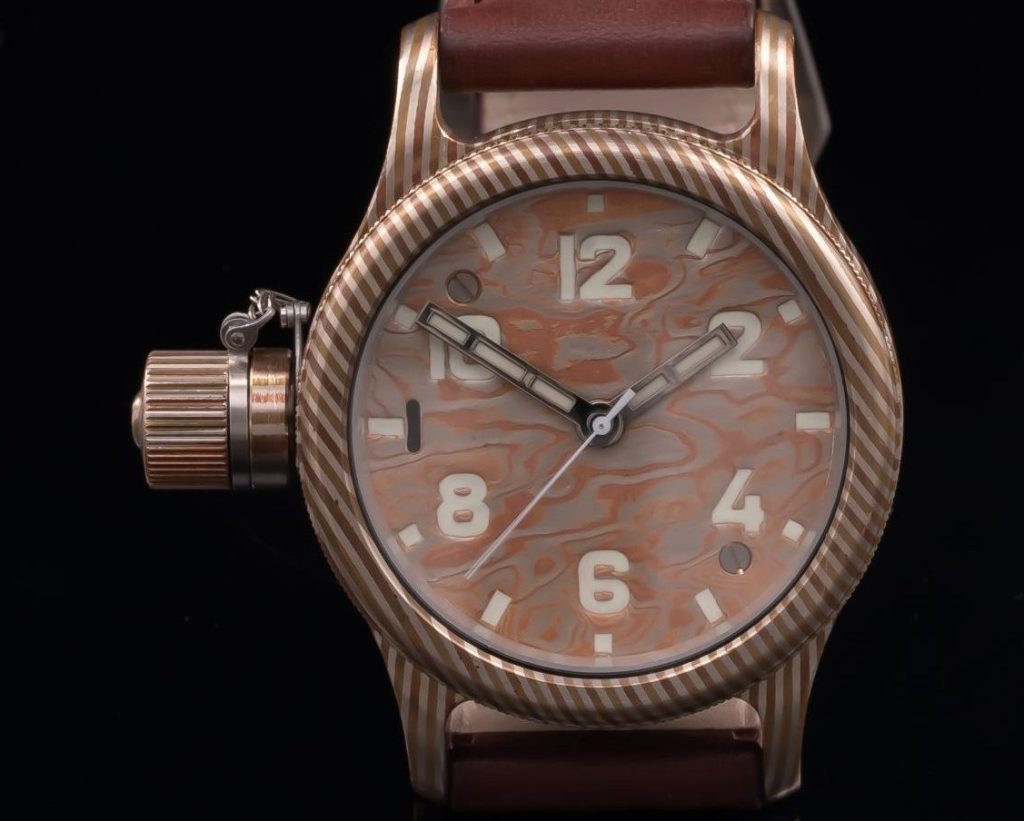
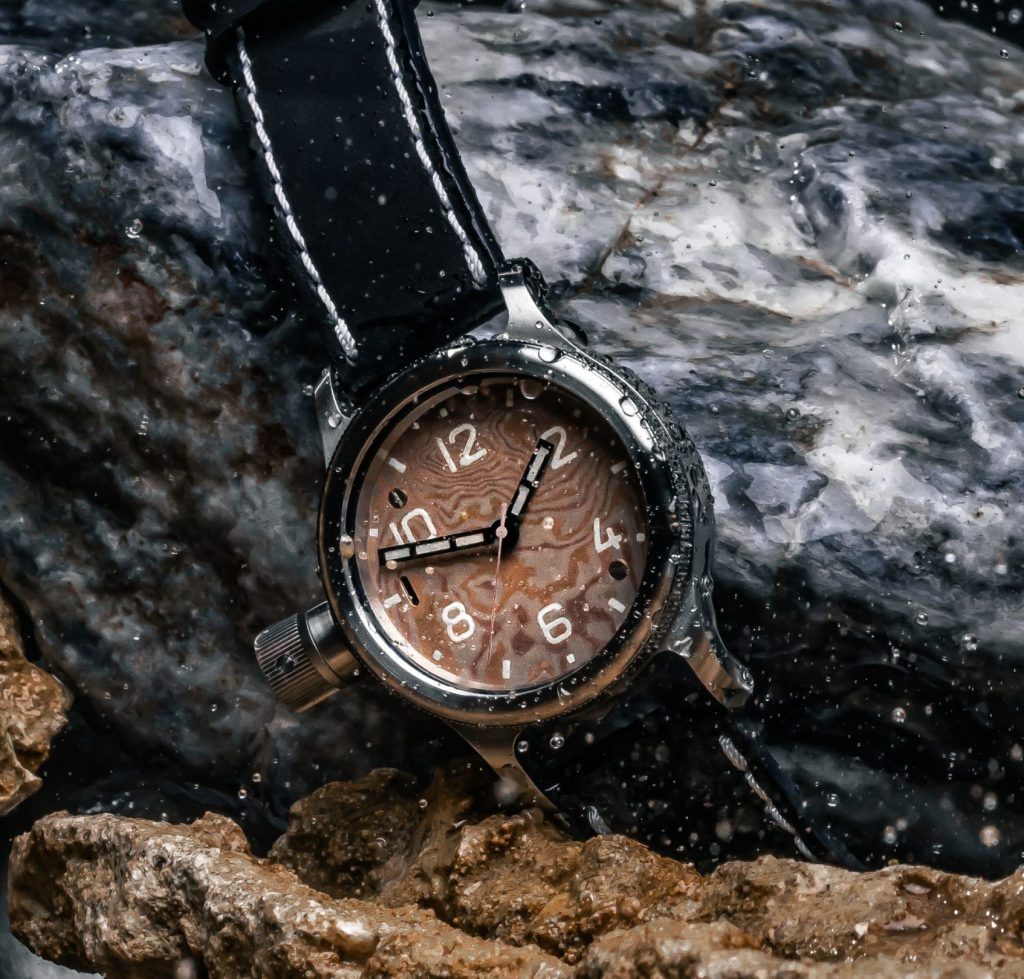
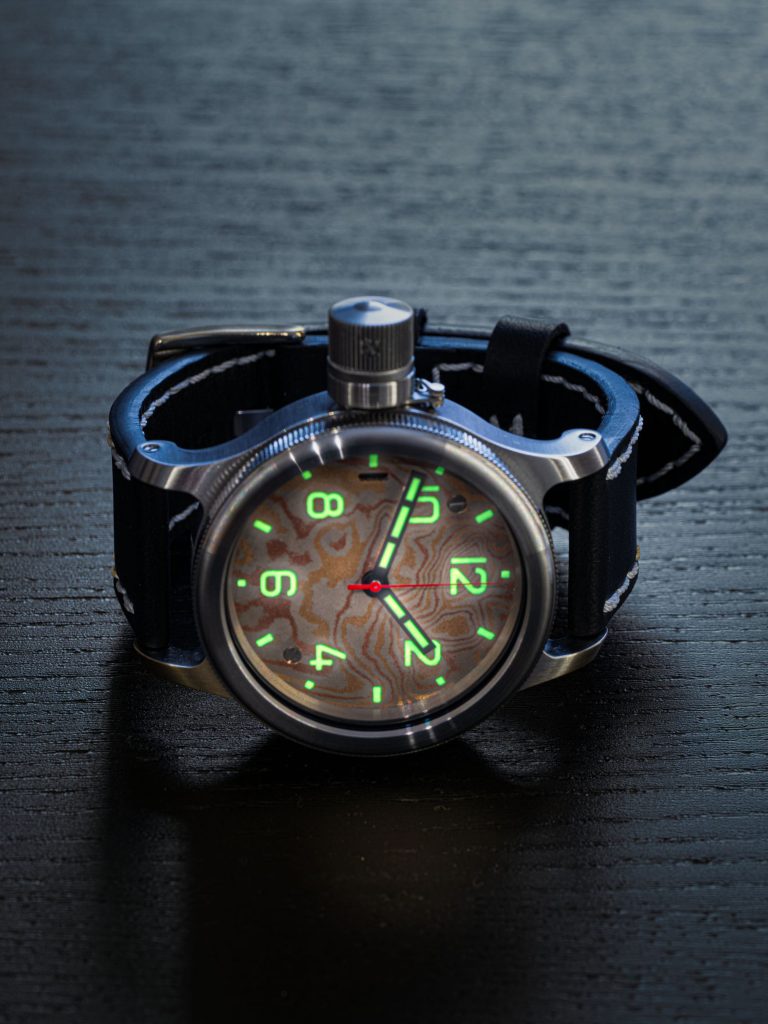
After polishing and special treatment, this unusual alloy produces a literal “metal wood” (hence the name) with a fanciful, strikingly beautiful pattern that never repeats.
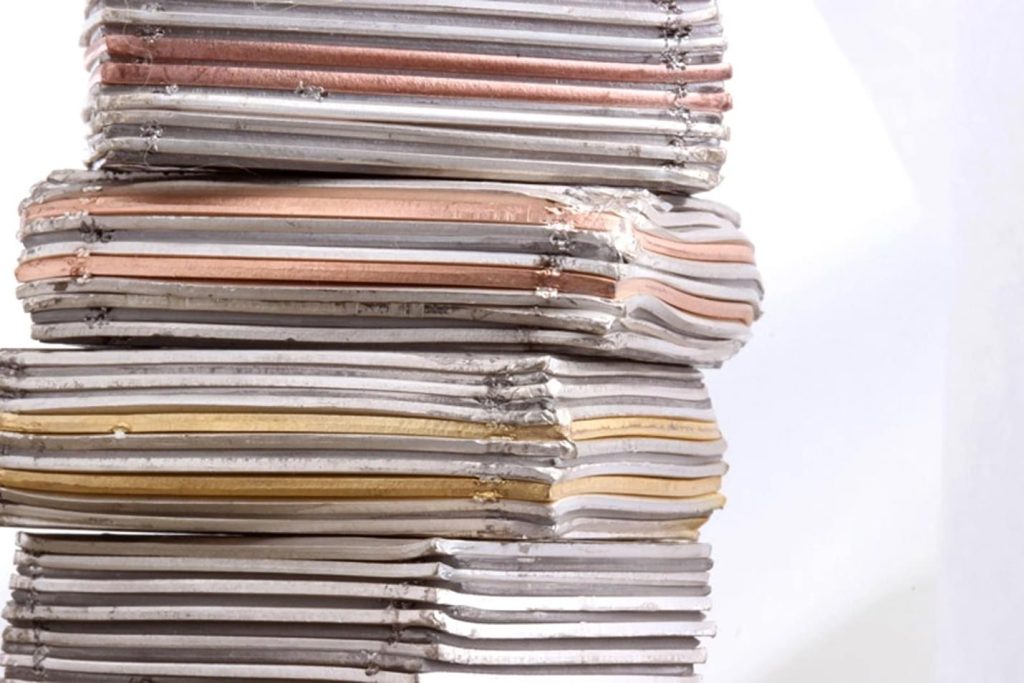
The craftsmen of Zlatoust decided to master mokume-gane and apply it to watchmaking. It may sound straightforward. Several layers of different metals—copper, brass and nickel silver in Zlatoust watches—are assembled into a billet and forged. That is where the real difficulties begin.
To weld the different materials together, they must be heated to a temperature close to their melting points; during forging, the metal layers bond together. This is the classic method used to make Damascus steel.
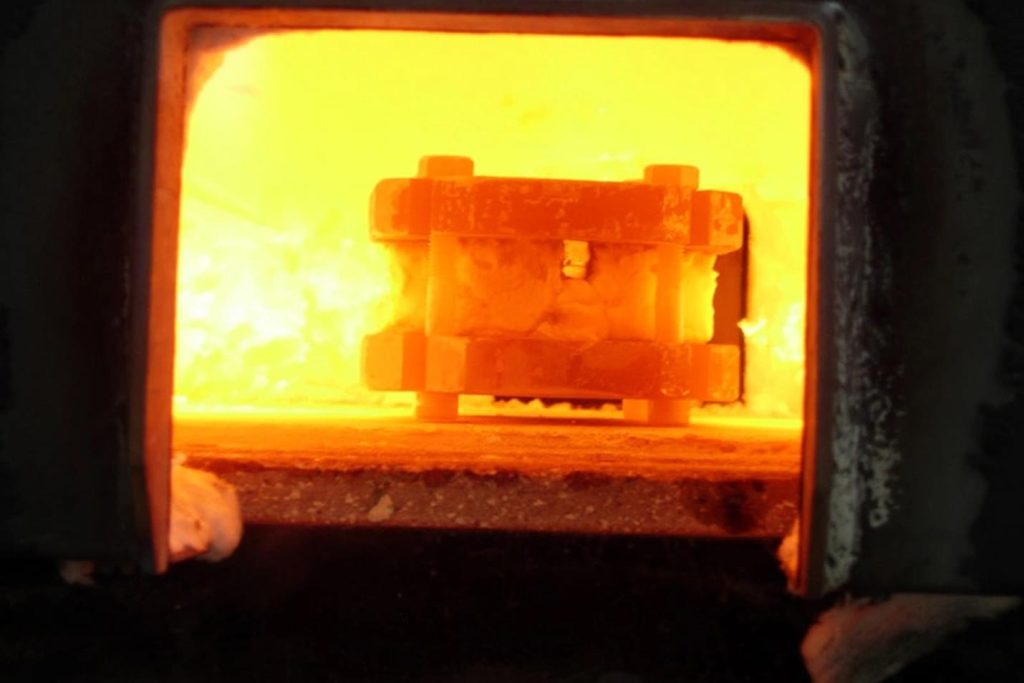
Our craftsmen are working with three metals whose melting points differ completely—by several hundred degrees. By the time the brass has melted into a pool, the nickel silver is still solid.
This is the main challenge of mokume-gane: finding the optimum temperature. Uniformly forge-welding metals with different properties is a challenge in itself. And that is the greatest challenge of all. Even the slightest deviation can cause defects and irreparable voids that may remain invisible until the final polishing stage.
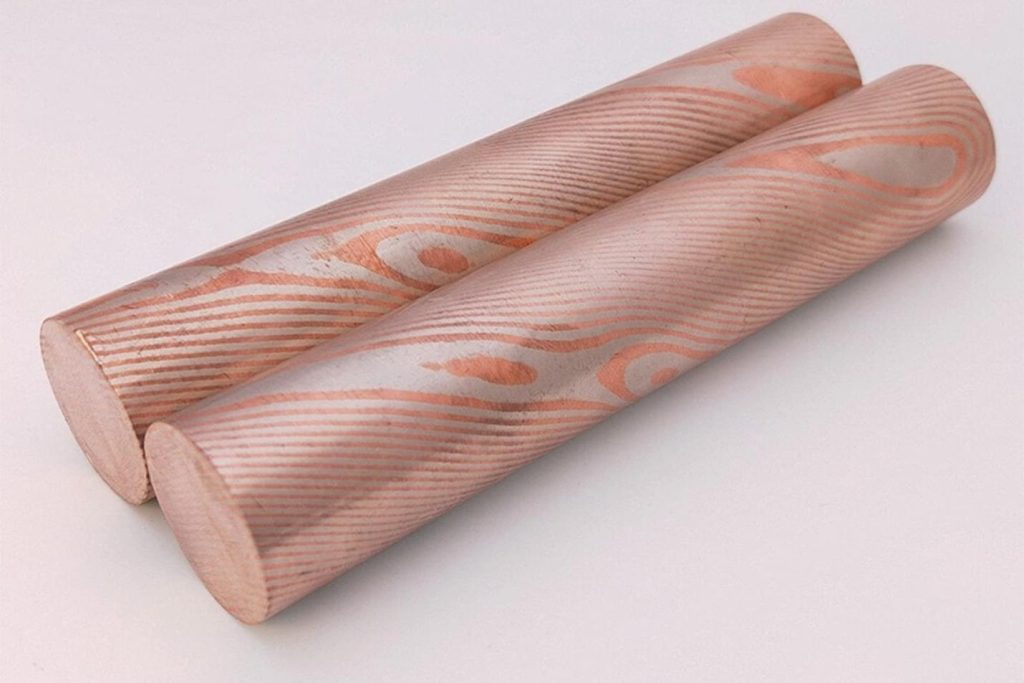
A mokume-gane billet can be compared to a layered pastry. It is built from several dozen metal layers—50 to 80 for a dial, and roughly twice as many for a watch case. The layers are heated, forged repeatedly, deformed and twisted so that the inner layers reach the surface, then forged again. The result is a striking multicolour pattern resembling tree bark. Copper gives it reddish hues, brass adds yellow, and nickel silver contributes silvery-grey tones.
Every resulting piece is unique. Even repeating every stage of the process to the second, with exactly the same materials, cannot produce two identical pieces.
Every watch with a mokume-gane case or watch with a mokume-gane dial is one of a kind—there will never be another exactly like it.